


 Return News & Events
We are excited to share that Beyang Therapeutics recently participated in the OpenADMET Blind PXR Induction Activity Prediction Challenge, which is jointly organized by OpenADMET (Apr 1, 2026 – Jul 1, 2026). Our team placed 8th out of over 350 participants in the Challenge.
OpenADMET is an open effort to build predictive models of ADMET properties and understand the mechanisms by which they arise. The project is a collaborative effort supported by multiple organizations (e.g., ARPA-H, Gates Foundation) and administered by the Open Molecular Software Foundation (OMSF).
As a xenobiotic-sensing nuclear receptor, PXR orchestrates the transcriptional regulation of drug-metabolizing enzymes and transporters. It serves as the principal regulator of CYP3A4, the cytochrome P450 isoform responsible for the biotransformation of approximately 50% of clinically approved pharmaceuticals. Inadvertent PXR activation can precipitate adverse outcomes, including clinically significant drug-drug interactions (DDIs) resulting from subtherapeutic co-administered drug concentrations, hepatotoxicity driven by reactive metabolites, and chemoresistance.
Predicting PXR liabilities early is notoriously difficult. PXR has a large, highly flexible binding pocket that accepts a diverse range of chemical structures, making it a “shape-shifter” that defies easy modeling. Furthermore, reliable data is scarce; high-quality measurements are limited, leaving a significant gap between the receptor’s importance and the resources available to study it.
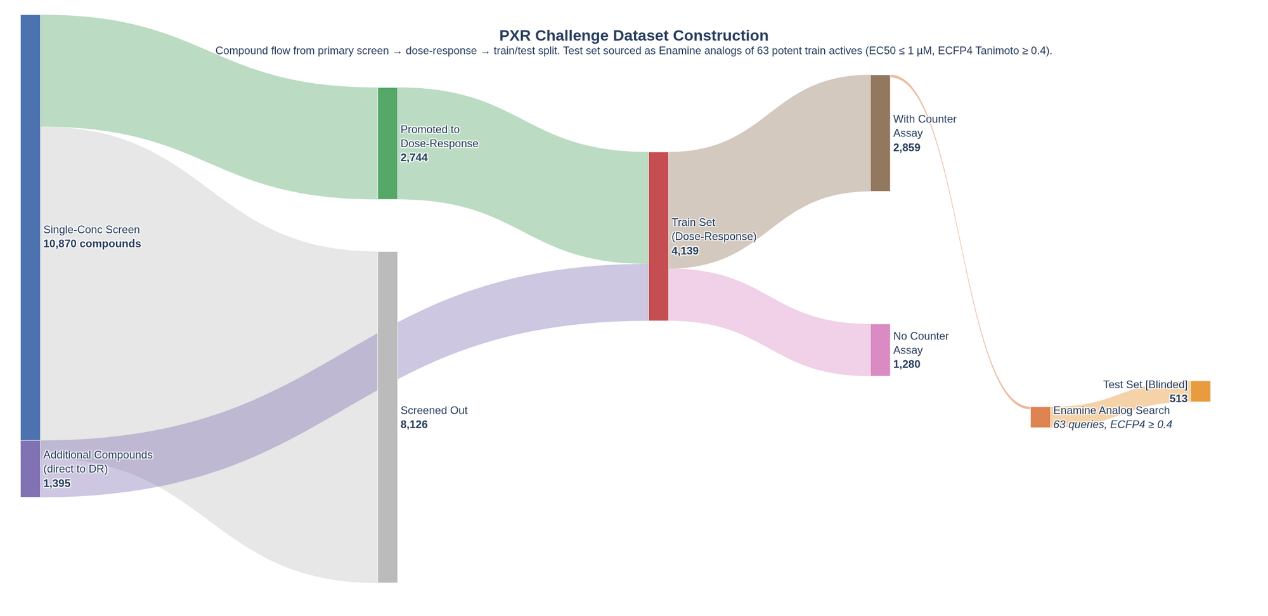 Figure 1. Sankey diagram showing flow between screening and assay steps used to construct the challenge dataset. (Source:challenge website)
OpenADMET has generated a PXR induction dataset of more than 11,000 compounds using a low-cost, high-fidelity in-house assay. Cumulatively, this represents the largest publicly available PXR activity dataset available today. The dataset construction process is shown in Figure 1. For more details, please refer to the official challenge website.
The challenge has drawn over 350 participants from both industry and academia institutions. Our team (submission name: Multi) secured 8th place in the competition (Figure 2). The predictive performance is fundamentally attributed to rigorous data preparation and robust model training (model report). We will share the complete methodology and pipeline details of our model in the upcoming OpenADMET challenge paper.
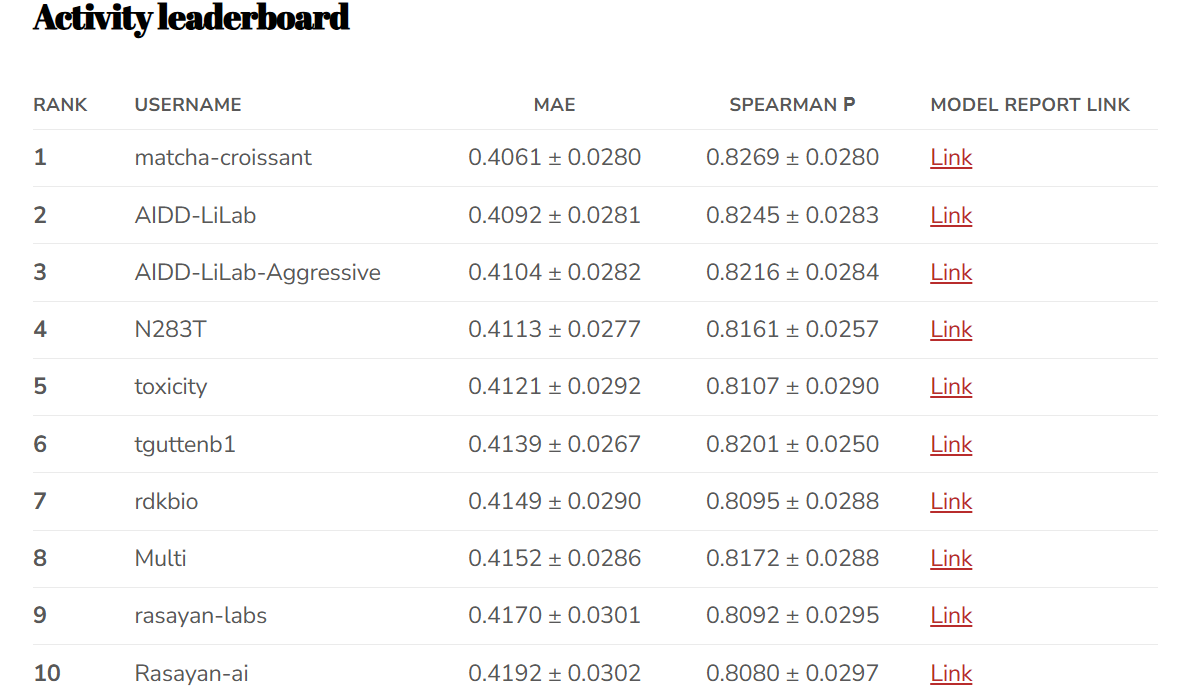 Figure 2. The final activity leaderboard